How to Choose a Contractor
We recommend to get at least three bids, and conduct interviews with your contractors as you would conduct as if you were hiring someone to work with you. Although we do not maintain an “in-house” design staff, we do work with a few local designers, architects and engineers that we have built strong relationships with.
10 Tips for Hiring a Contractor
Hiring a contractor can be confusing and with so many to choose from making an informed and educated decision may be difficult. Here is a list of 10 things to look for when hiring a contractor for any job:
1) Only hire a licensed contractor - In the state of California a contractor who is licensed has met all of the California State Licensing Board requirements, which include:
- A mandatory number of years experience in your trade before you can test
- Testing for each license they are applying for, which includes questions about business practices,the law, contracts, and safety to name a few.
- The applying contractor must have a bond before testing. A bond protects you in the event of a loss against damage caused by the contractor.
Hiring a contractor who is licensed, like Chad of All Trades, Inc lic #841527, will ensure the person performing the work knows what he is doing and you are covered just in case.
2) Check your prospective contractor’s license - The California State License Board can provide you, the homeowner, with the vital information you need to make an informed decision.
For more information about Chad of All Trades, Inc please refer to this site: http://www2.cslb.ca.gov/CSLB_LIBRARY/License+Detail.asp
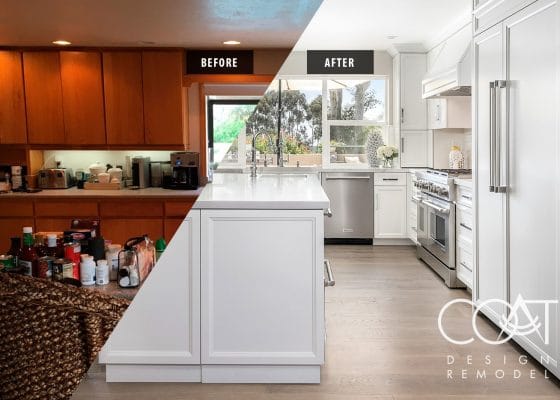
3) Get at least 3 references and check their past work - Any legitimate contractor will be more than happy to provide you with names and contact information from previous customers. They should also have a gallery of before and after pictures, whether they are physical copies or on their website.
To view some of our work, please click here.
4) Obtain 3 bids from 3 licensed contractors - Contractors bid jobs differently and at different prices. It is always a good idea to compare costs, line item details, materials and what is included in the price.
5) Get a written contract and don’t sign anything until you completely understand the terms - this will ensure that both you and the contractor are on the same page and if any situations arise you have the terms of your job on paper.
6) Pay 10% down or $1000, whichever is less - This is the Law. You are not required to pay more than 10% or $1000.00 whichever is less at the start of your job. Be wary of a contractor that is trying for a higher payment.
7) Don’t let payments get a head of work and keep records of all payments you have made - No one wants to pay for something they have not yet received. Stay on top of your payments and how much you have left to pay. Don’t be afraid to ask for a detailed summary of work that has been performed since you last payment and the associated cost to make sure you are not paying for part of the job that is not yet complete.
8) Don’t make the final payment until you are satisfied with the job - Unfortunately once someone has their money in hand it could be difficult to get them to return to fix mistakes or incomplete projects. Don’t let this happen to you. If you are unsatisfied with the work, make sure you have the contractor fix it to your standards before your final payment.
9) Don’t pay with Cash - the main reason is there is no way to track cash. Paying with a check or credit card will provide you with a proof of payment for future reference.
10) Keep a job file with all papers relating to your project - Stay organized. Know what is going on, what you have to pay, when you have paid, the details of the project, the estimated time line and keep it all in one place together.
Information taken from the California State Licensing Board, www.cslb.ca.gov.


San Diego Remodel and Construction, Handyman Services